|
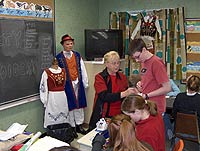
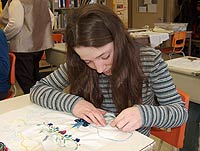
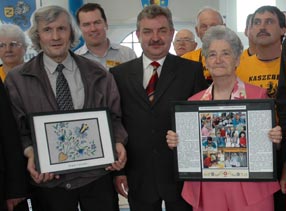
The Heritage Society is very fortunate to have Theresa Chapeskie to help with these classes. Theresa has been embroidering all of her life, but the Kashubian style was new to her until she visited Kashuby, Poland in 2004. She immediately fell in love with the patterns and carries that love forward to the classes she now coordinates with the young people in our community.
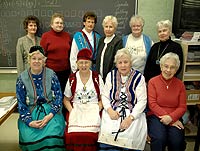
Joining Theresa in her teaching program are Bernice Bleskie, Rose Marie Recoskie, Rose Marie Trader, Eva Kulas, Veronica Bialy, Helene Urbanowicz, Sophia Kosinski, Eva
Kaczkowski, Leokadia Ziemiak, Bronislawa Mazgaj and Joanna Szymanski.
The effort of these wonderful ladies will ensure that the tradition of Kashubian Embroidery will be passed down in future.
|






 Embroidery
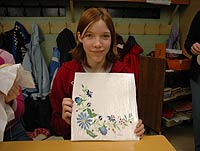
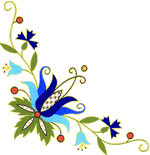
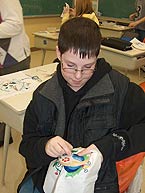 Kashubian Embroidery was a lost art with the Canadian Kashub Poles,
although the craft of Embroidery was not. Embroidery is still very much alive in the Valley. Kashubian Embroidery was abandoned in Canada
and the ladies took to Canadian patterns which they could purchase from the Sears' or Eaton's Catalogues. When the ladies did this, they
did not realize that they were losing a part of their Kashubian Culture. Today the Wilno Heritage Society has revived the old country craft. We
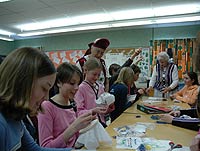
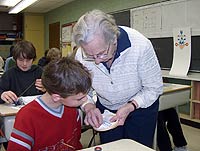
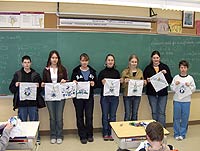
now offer Kashubian Embroidery classes in the local elementary schools: St. Mary's School in Wilno, St. John Bosco School in Barry's
Bay, George Vanier School in Combermere, St. Casimir's School in Round Lake, etc.[on a rotational basis]
Kashubian Embroidery was a lost art with the Canadian Kashub Poles,
although the craft of Embroidery was not. Embroidery is still very much alive in the Valley. Kashubian Embroidery was abandoned in Canada
and the ladies took to Canadian patterns which they could purchase from the Sears' or Eaton's Catalogues. When the ladies did this, they
did not realize that they were losing a part of their Kashubian Culture. Today the Wilno Heritage Society has revived the old country craft. We
now offer Kashubian Embroidery classes in the local elementary schools: St. Mary's School in Wilno, St. John Bosco School in Barry's
Bay, George Vanier School in Combermere, St. Casimir's School in Round Lake, etc.[on a rotational basis]