|
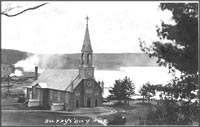
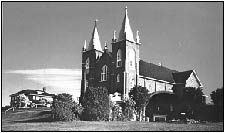
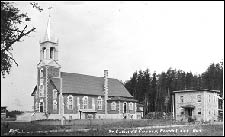
Today these three churches stand as powerful symbols of the strong faith of the Polish Kashub people in Canada, although the Polish element is constantly weakening. It has almost
disappeared at St. Casimir's.
For a number of years, starting with Canadian born, Father Peter Biernacki, there were enough Polish Kashub speaking native sons who joined the priesthood to meet the needs of the Polish
parishes. But just as the Polish Kashub language has slowly disappeared from usage in many area homes, the Polish Kashub speaking priests have aged and retired. Again the parishes must rely
on finding assistance from priests from outside the community— priests who speak Polish (not Kashub) to maintain the Polish language element in the Polish parishes.
Some see it as no longer of much importance - after all, we are Canadians first and foremost, although we are still proud of our Polish Kashub roots; and of course most of the parishioners of the
Polish parishes now speak English as their language of choice, although many can still speak the Polish Kashub language they learned as children. We should not forget, however, how hard our ancestors
fought to get their own Polish churches and parishes and respect this history. If only we could find realistic ways to maintain a Polish Kashub element in our Polish parishes. If not, we will risk
losing them in the cultural melting pot that will eventually rob us of all uniqueness.
|